Downer Cattle
A common occurrence in both beef and dairy cattle is what is commonly called a “down cow” – meaning simply that you have a cow which is unable to get up. There are several common causes of a downer cow:
METABOLIC
Deficiencies in minerals such as calcium, magnesium, and phosphorus can interfere with a cow’s ability to get up. Low calcium, more commonly called Milk Fever, is a common cause. In dairy cattle this happens most commonly shortly after calving whereas in beef cattle it can occur at any time from pre-calving right through to late lactation. Deficiencies in magnesium and phosphorus can also occur quite commonly, sometimes linked with inadequate intake or poor quality feed. Treating these animals with intravenous and subcutaneous supplements often helps them recover. It is important to keep in mind that if you have one down cow, she is likely just the tip of the iceberg and you may have more cattle with borderline low levels of minerals.
MUSCULOSKELETAL OR NEUROLOGICAL
Injuries are another common cause of downer cattle. For example, a broken leg or a dislocated hip can both easily prevent a cow from getting up. Unfortunately, these are usually death sentences in our cattle. Another common issue is nerve paralysis after calving – when the calf is coming through the birth canal, it can place pressure on the nerves which can lead to weakness in the hind end, or if more severe, an animal that is unable to get up. Depending on the severity of the nerve paralysis, these animals can be treated and may fully recover.
MASTITIS/METRITIS
Infection of the udder or of the uterus can make a cow quite sick and unable to rise simply due to weakness associated with an infection. These cows will often have other symptoms such as unwillingness to eat, fever, dehydration etc. These cows will often require antibiotic treatment and prognosis is dependent on the severity of the infection and length of time the cow has been down.
OTHER
Underconditioned cattle can get to the point, usually in late gestation, where their bodies are no longer able to keep up with the high energy demands of growing a baby. Often these animals are too far gone and even if adequate nutrition is provided, it is often too late to return them to a saveable state.
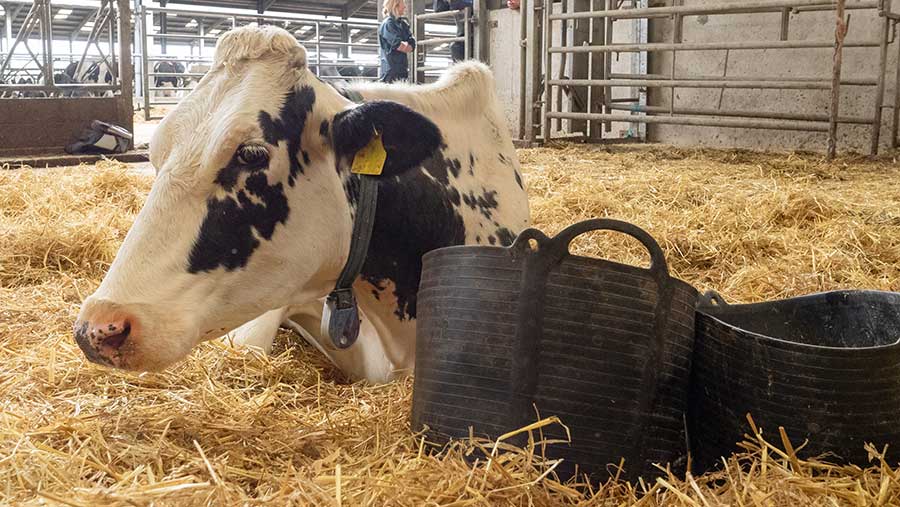
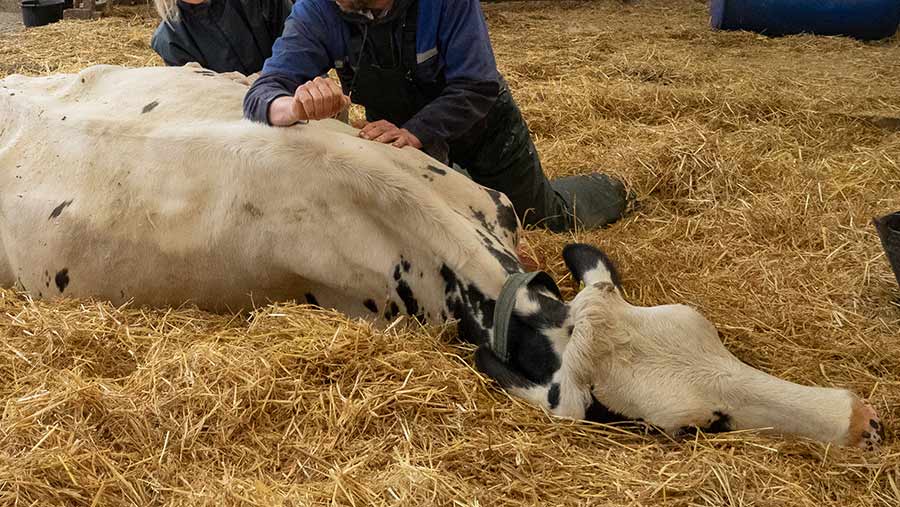
The above causes are the most common for downer cattle, but we always have to keep in mind that anomalies or rare disorders do happen in our cattle as well.
Timely intervention on a down cow is key. The longer a cow is down, the more likely she is to have muscle breakdown and nerve paralysis issues simply due to her large body mass.
Our team can help you determine which of the above is the most likely cause for your down cow. We will do this by starting with a thorough physical examination plus we will likely recommend bloodwork to help us determine the cause, prognosis, and a treatment plan.